Build the Classroom of Tomorrow with AI, Play and Immersive Tech
Erasmus+ Course: Designing the Future Classroom: Pedagogy, Play, and Immersive Technologies
An Erasmus+ Professional Development Course in Redesigning Classrooms with AI, AR/VR, 3D Design, Robotics and Immersive Learning Technologies
Course Objectives & Learning Outcomes
01
Apply future-oriented pedagogical methodologies (active learning, inquiry-based)
- learning, project-based learning, UDL, STEAM, cross-curricular approaches)
- Design learning experiences that foster engagement, flow, and intrinsic motivation
- Integrate AR/VR and immersive media into classroom practice
02
Use 3D scanning and digitization techniques to create educational digital assets
- Create and adapt 3D models for educational use and 3D printing
- Prototype serious games, simulations, and gamified learning activities
- Use generative AI and LLMs (in ethical way) for: interactive storytelling, branching narrative scenarios, personalized learning paths & visual and multimedia content creation
03
Design hybrid physical–digital–virtual classrooms
- Re-think and restructure curriculum and syllabi to improve learning efficiency and effectiveness
Develop a future classroom concept applicable to their own educational context
The course programme outline
- Rethinking physical, digital, and virtual learning spaces; case studies of innovative European classrooms. Focus on Inclusion and Accessibility. Principles of UDL.
- Integration of Game-Based Learning in the UDL framework
- The Theory of Fun and Flow State – student engagement and intrinsic motivation
- Engagement in games and its transfer to classrooms
- individual and pair work assessment
- round-up of completed activities and hands-on experience
[/dipi_horizontal_timeline_item][dipi_horizontal_timeline_item ribbon=”Day 2″ title=”Day 2 Technology, Pedagogic Adaptation and Inclusivity” timeline_icon=”$||divi||400″ _builder_version=”4.27.4″ _module_preset=”default” global_colors_info=”{}”]
- Building a future-ready, inclusive curriculum
- Educational game mechanics for differentiated instruction.
- Digital Fabrication and 3D Printing in Education
- 3D Scanning and Creative Multimedia Technologies (AR/VR) – availability and portability
- Generative AI for asset creation, interactive storytelling and personalised learning paths
- Robotics and Drones – a “maker-space” lab – computational thinking and spatial reasoning, “Learning by Doing” methodology, safe zones for drone operation
- Individually or in teams, design adaptable gamified learning activities and spaces for the future classroom
- individual and group work assessment
- round-up of completed activities and hands-on experience
[/dipi_horizontal_timeline_item][dipi_horizontal_timeline_item ribbon=”Day 3″ title=”Day 3 Examples Showcase & Cultural Heritage” _builder_version=”4.27.4″ _module_preset=”default” global_colors_info=”{}”]
- Meeting and briefing at the Center of Excellence of Split-Dalmatia County. Showcase of immersive technologies and physical labs. Focus on safety, inclusion and accessibility.
- Experience how interactive storytelling can create an active learning lab in a real-world context.
- individual and group work assessment
- round-up of completed activities and hands-on experience
[/dipi_horizontal_timeline_item][dipi_horizontal_timeline_item ribbon=”Day 4″ title=”Day 4 The Future Classroom Blueprint – Design and Prototype” _builder_version=”4.27.4″ _module_preset=”default” global_colors_info=”{}”]
- Spend the full day in the simple, but powerful Twinmotion 3D visualisation tool, building the Future Classroom Blueprint.
- Project setup and interface navigation
- Using provided 3D models and templates, demonstrate how your classroom integrates a UDL pedagogical framework and chosen technologies. This includes:
- Designing spaces for both collaborative and individualised work.
- Integrating assistive technologies (AR/VR/AI…) to support inclusion.
- Creating a 3D interactive walkthrough that proves the space is accessible to all.
- individual and group work assessment
- round-up of completed activities and hands-on experience
[/dipi_horizontal_timeline_item][dipi_horizontal_timeline_item ribbon=”Day 5″ title=”Day 5 The Future Classroom Blueprint – Design and Prototype” _builder_version=”4.27.4″ _module_preset=”default” global_colors_info=”{}”]
- Finalizing and polishing your hybrid physical–digital–virtual space design.
- Packaging your design into 3D interactive walkthrough
- Presentation, peer review and feedback, prioritizing UDL and accessibility.
- Sustainability and transferability to home institutions and restructuring syllabi for efficiency.
- Explore KA2 Strategic Partnerships for co-developing European Future Classroom Frameworks and shared curricula.
- individual and group work assessment
- round-up of completed activities and hands-on experience
[/dipi_horizontal_timeline_item][dipi_horizontal_timeline_item ribbon=”Day 6″ title=”Day 6 Certification Day” _builder_version=”4.27.4″ _module_preset=”default” global_colors_info=”{}”]
- round-up of learning outcomes: reflection, discussion and self-assessment
- review of the course: evaluation and feedback
- certification ceremony
- goodbye final activity
[/dipi_horizontal_timeline_item][/dipi_horizontal_timeline]
Course Syllabus
Download The Course Program
Gain a deeper understanding of our course structure by downloading our detailed syllabus. This document provides an in-depth look at the topics covered, learning activities planned, and the assessment methods employed throughout the course. It’s an essential resource for prospective participants to assess the course’s relevance and alignment with their professional development goals.
Course Details & General Information
What if classrooms were designed like great games – engaging, meaningful, inclusive, and impossible to ignore?
This course invites educators to step into the role of future classroom designers, blending cutting-edge pedagogy with immersive and creative technologies. Participants explore how play, storytelling, and flow state can transform learning across all subjects and age groups, while working hands-on with AR/VR, 3D scanning, design and printing, robotics and drones, educational games design and simulations, creative multimedia and generative AI.
Teachers don’t just learn tools – they reimagine learning spaces, activities, and curricula, creating hybrid physical-digital-virtual classrooms where students are active players, not passive listeners.
Practical examples, showcase and usage of these technologies will be displayed and
explained on premises (Center of Excellence of Split-Dalmatia County).
By the end of the course, each participant leaves with a Future Classroom Blueprint: a practical vision, transferable to any context, for more engaging, effective, and future-proof education.
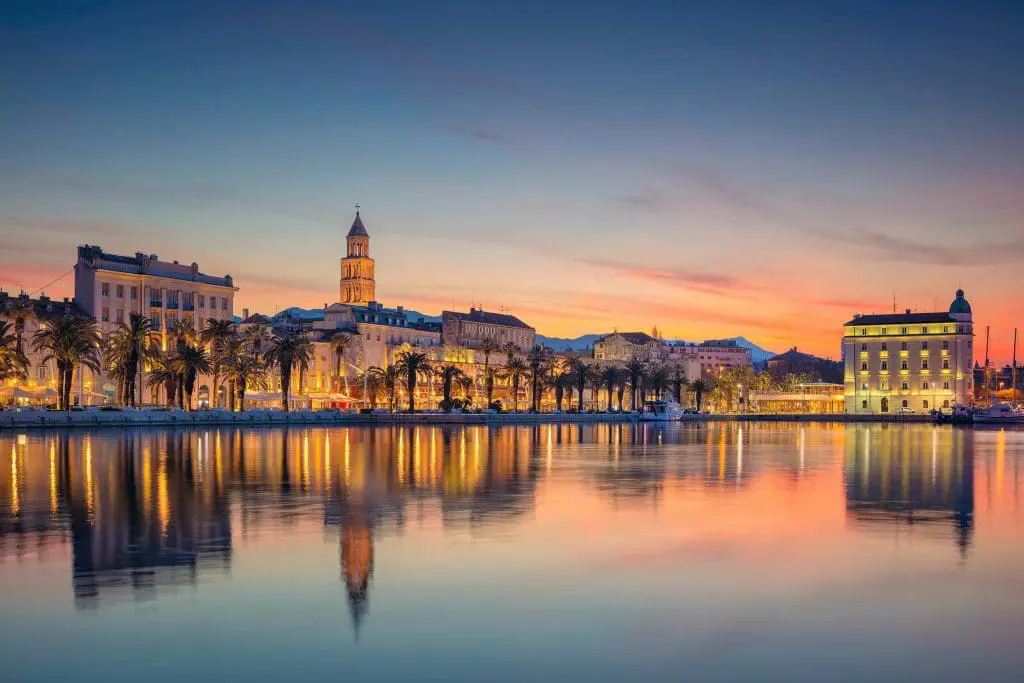
Erasmus+ Teacher Training in Split Croatia
How Your Days in Split Are Structured
Our Erasmus+ course spans a total of 6 days, carefully balanced between structured learning and free time in Split and the local area.
According to Erasmus+ Quality standards for courses under Key Action 1 (learning mobility of individuals), a working day lasts for 5 hours, i.e. from at 9:00 AM – 14:00 PM with a possibility to extend working hours one day due to cultural heritage visits and field classes.
The day concludes with free time after the classes for personal cultural exploration or relaxation in the picturesque city of Split.
By the end of this course, participants will be able to:
- Apply future-oriented pedagogical methodologies (active learning, inquiry-based
- learning, project-based learning, UDL, STEAM, cross-curricular approaches)
- Design learning experiences that foster engagement, flow, and intrinsic motivation
- Integrate AR/VR and immersive media into classroom practice
- Use 3D scanning and digitization techniques to create educational digital assets
- Create and adapt 3D models for educational use and 3D printing
- Prototype serious games, simulations, and gamified learning activities
- Use generative AI and LLMs (in ethical way) for:
interactive storytelling, branching narrative scenarios, personalized learning paths & visual and multimedia content creation
- Design hybrid physical–digital–virtual classrooms
- Re-think and restructure curriculum and syllabi to improve learning efficiency and effectiveness
Develop a future classroom concept applicable to their own educational context.
All courses’ designs, educational and teaching material, and professional articles are original, made by well-experienced educators, and as their authors, our educators guarantee the educational and teaching quality of the Lina Edu content.
Note:
The course programme and schedule can be changed, because minor changes are possible due to the organizational requirements and trainers’ disposal.
Classes are organized in the morning or in the afternoon depending on the organizational requirements and trainers’ disposal.
Meet Your Expert Trainers
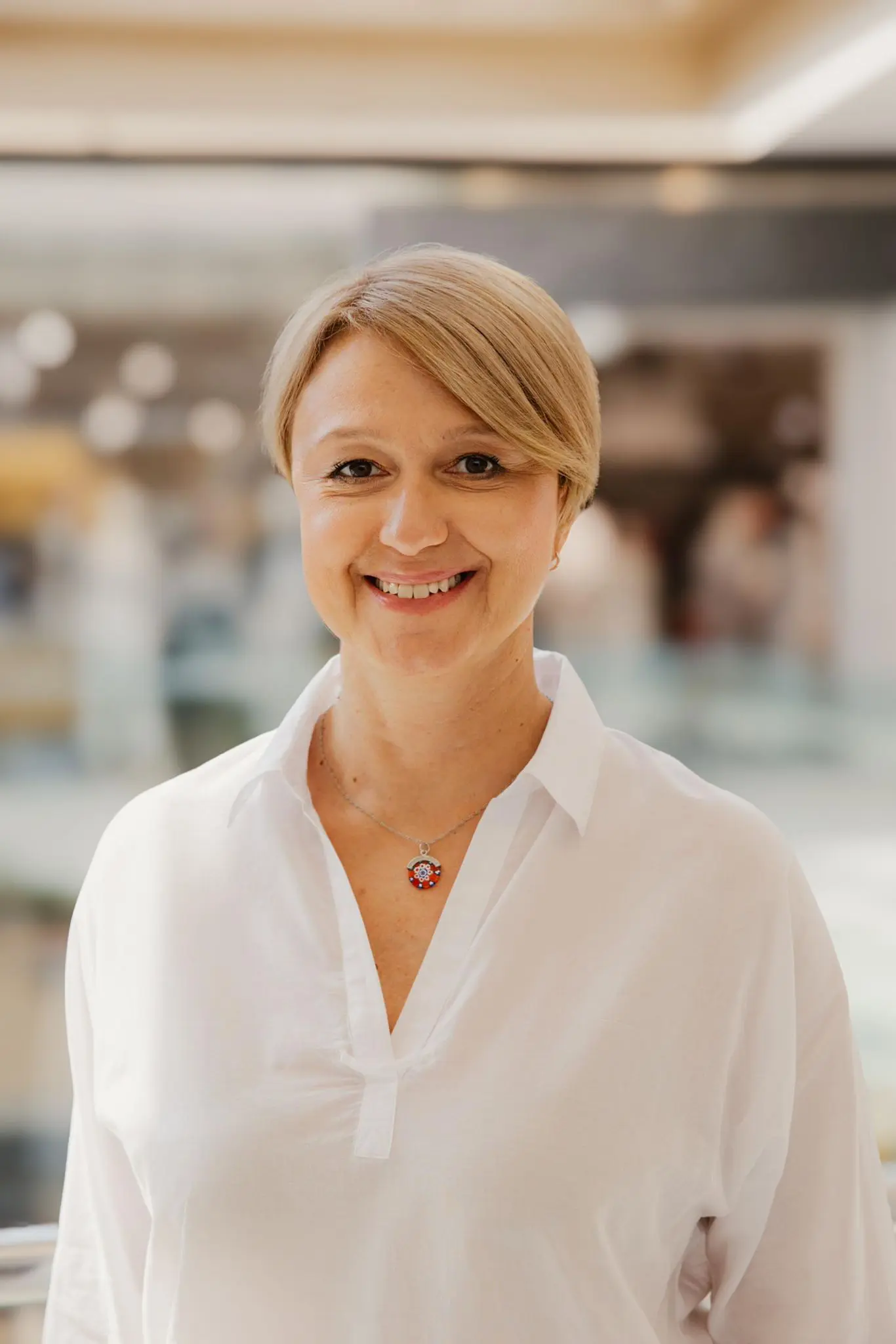
Ivana Bokavšek
Lina Edu Founder
A motivated teacher is a good learner, teaching magician who brings all the learning outcomes to the highest levels. What motivates me, is passion for learning.
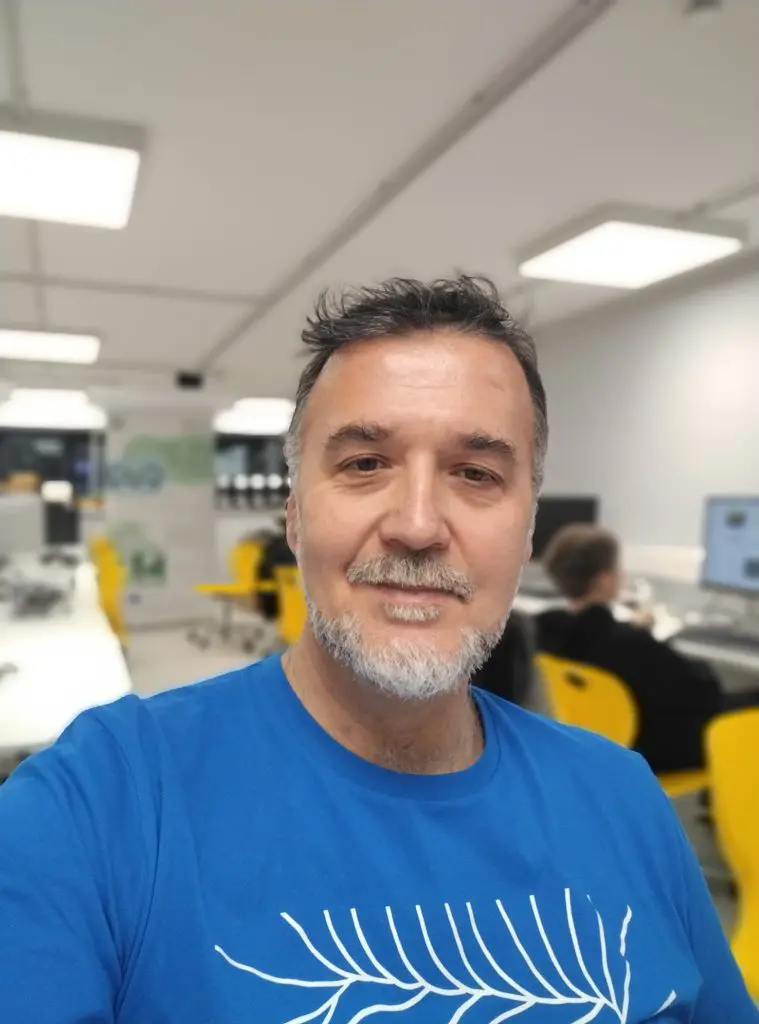
Gordan Mihalec
Lina Edu Lead Educator
Ready to Transform Your Teaching?
Join our exclusive Erasmus+ courses in Croatia, Split and enhance your skills amidst its scenic beauty and cultural heritage.
YEARS TEACHING EXPERIENCE
JOB SHADOWING HOSTING YEARS
Courses
YEARS IN EUROPEAN PROJECTs
Get In Touch
EXPERIENCE LINA EDU TEACHER TRAINING PROGRAMME IN SPLIT, CROATIA
Start your Erasmus+ Croatia Course adventure with us! Join us on a teacher training adventure with Lina Edu Erasmus+ KA1 Courses in Split, Croatia. Explore our diverse courses programmes and enrol today to develop your teaching skills & competencies. Elevate your language skills and indulge in the beauty of local cultural heritage. Let's start your journey to teacher training excellence together.
PRIVACY POLICY
TERMS OF USE
Our Erasmus+ courses are eligible for Erasmus+ funding. OID number: E10267990