
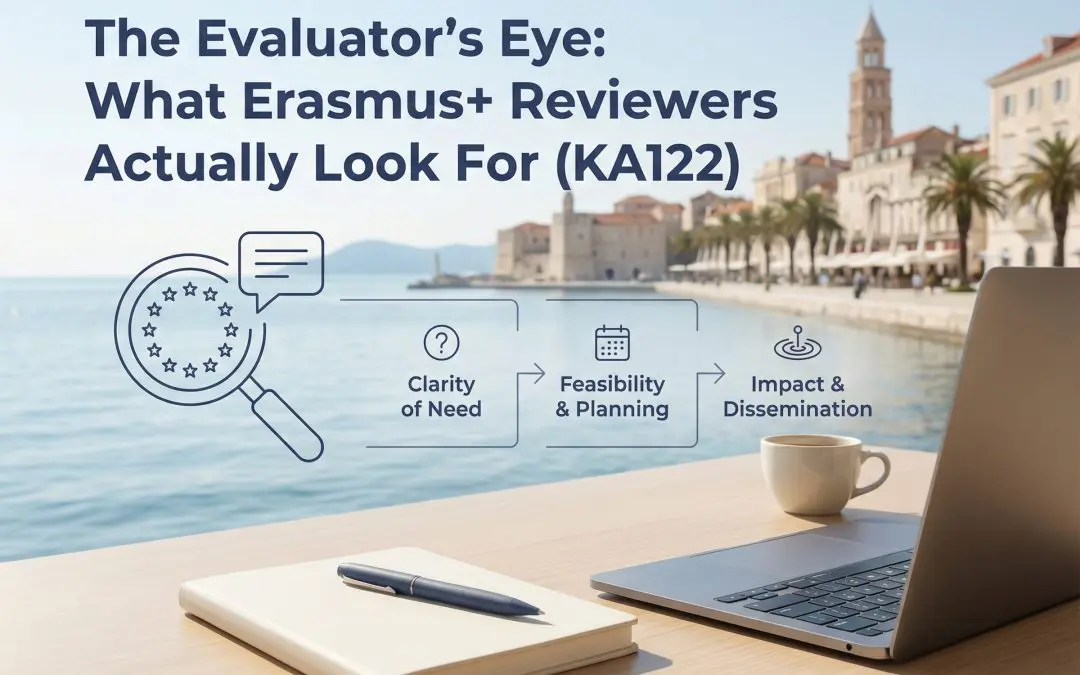
Erasmus+ evaluators don’t read applications the way applicants write them.
They don’t ask:
“Is this ambitious?”
They ask:
👉 “Is this credible, coherent, and low-risk?”
Understanding this shift is often the difference between approval and rejection.
1. Evaluators Look for Logic, Not Passion
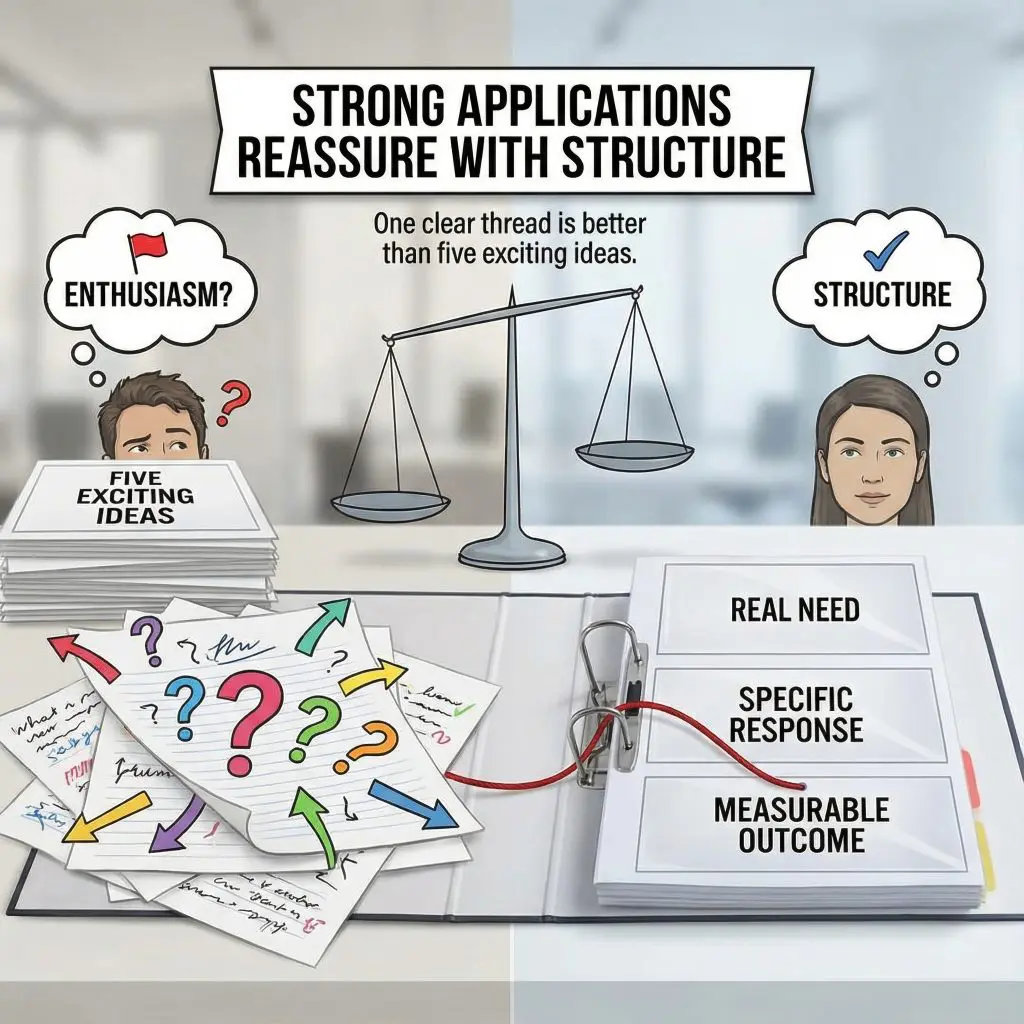
Strong applications don’t impress with enthusiasm — they reassure with structure.
They show:
-
a real school need
-
a specific training response
-
a measurable outcome
One clear thread is better than five exciting ideas.
If the evaluator has to guess why something is included, it’s already a risk signal.
2. The European Development Plan Is Not a Formality
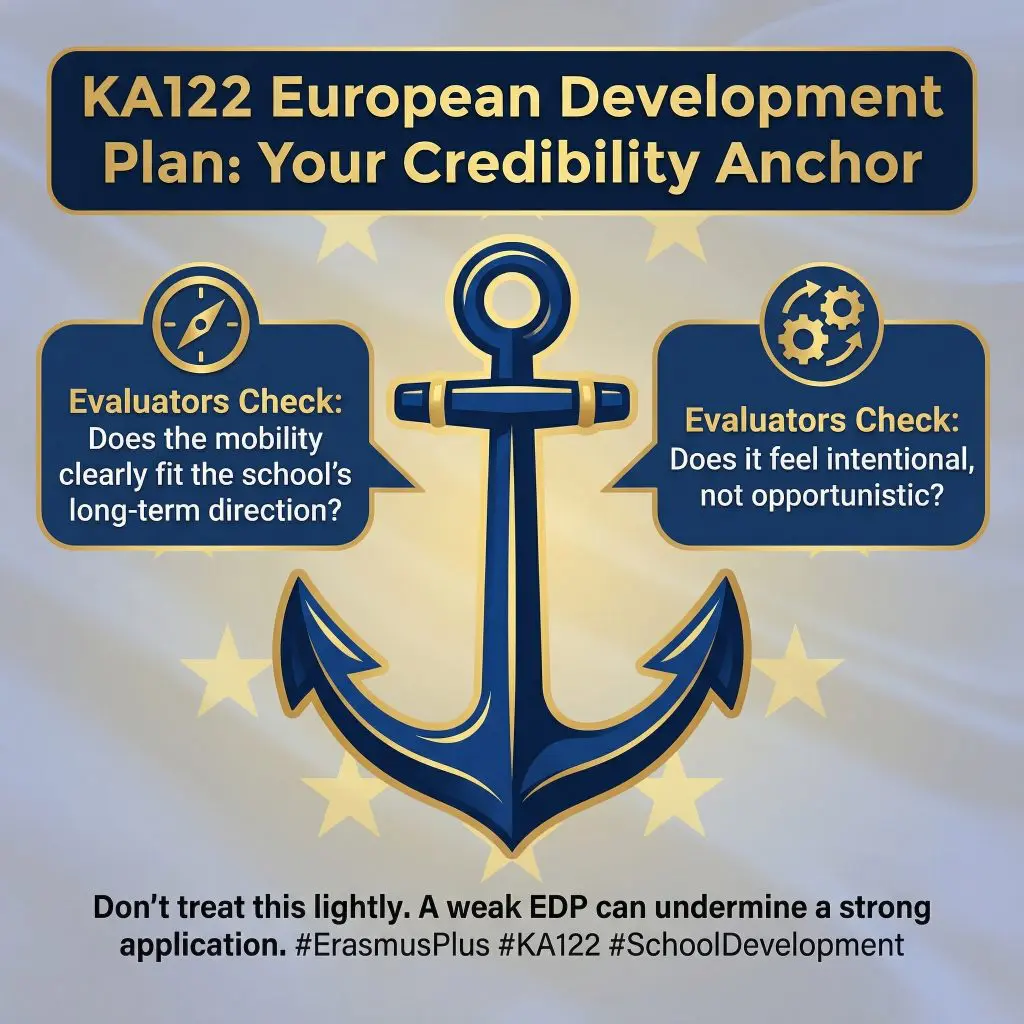
For KA122, the European Development Plan is a credibility anchor.
Evaluators check:
-
does the mobility clearly fit the school’s long-term direction?
-
does it feel intentional, not opportunistic?
Applications that treat this section lightly often feel rushed — even if other parts are strong.
3. Quality Over Quantity Wins Every Time
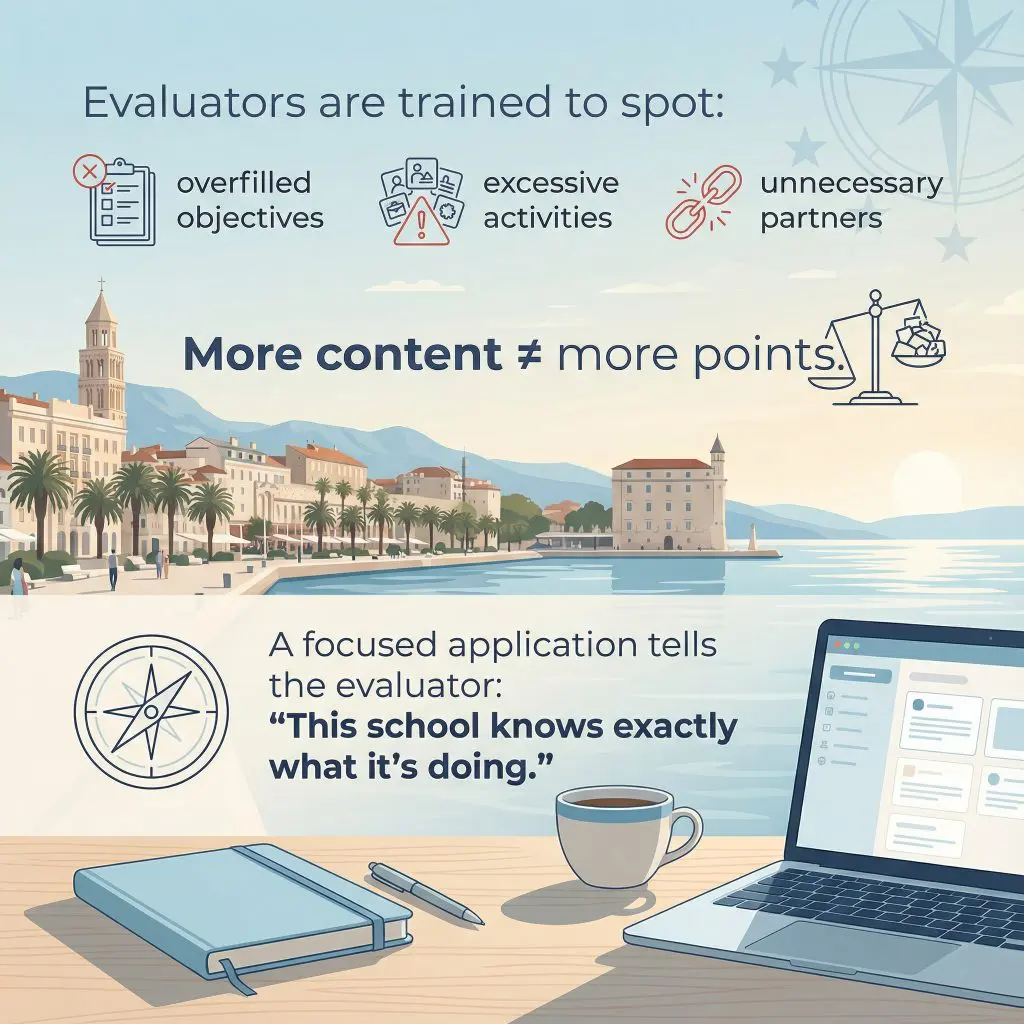
Evaluators are trained to spot:
-
overfilled objectives
-
excessive activities
-
unnecessary partners
More content ≠ more points.
A focused application tells the evaluator:
“This school knows exactly what it’s doing.”
4. Budgets and Partners Are Signals of Maturity
Even when technically correct, budgets and partnerships signal mindset.
Evaluators subconsciously ask:
-
“Will this school struggle operationally?”
-
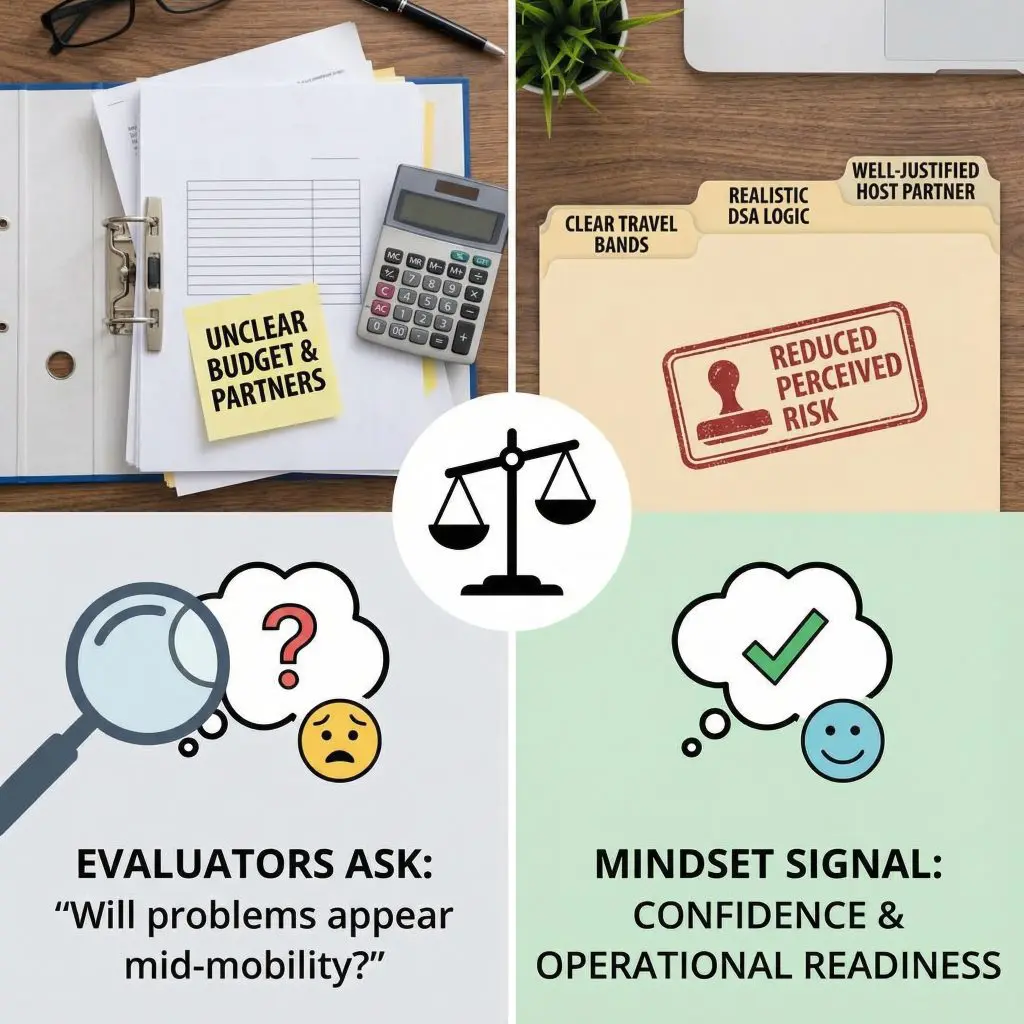
“Will problems appear mid-mobility?”
Clear Travel Bands, realistic DSA logic, and a well-justified host partner reduce perceived risk.
Here are the 3 things evaluators hunt for (and usually don’t find):
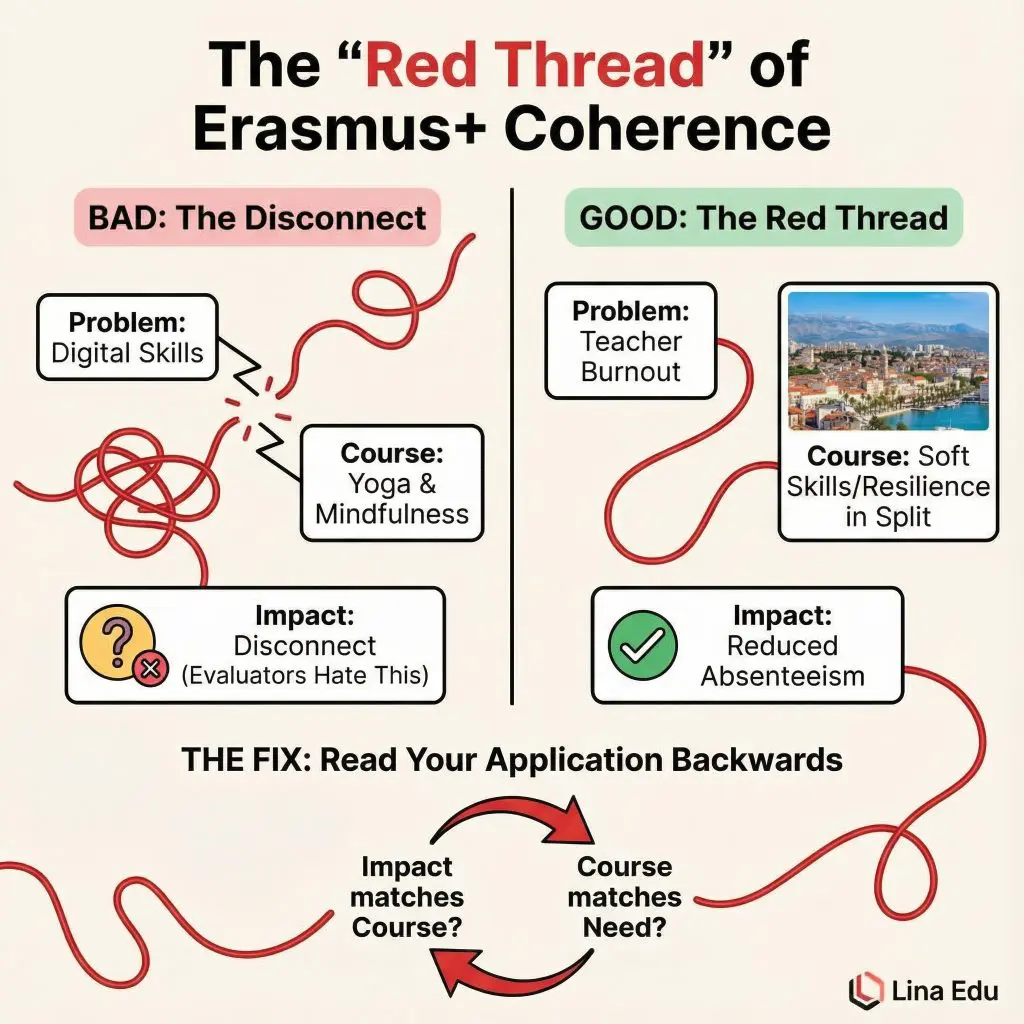
1. The “Red Thread” (coherence)
Evaluators hate disconnects.
-
Bad: You say your problem is “Digital Skills,” but you apply for a “Yoga and Mindfulness” course.
-
Good: You identify “Teacher Burnout” as the problem -> You choose a “Soft Skills/Resilience” course in Split -> You expect “Reduced Absenteeism” as the result.
-
The Fix: Read your application backwards. Does the Impact match the Course? Does the Course match the Need?
2. Concrete Schedules (Quality of Design)
Vagueness kills scores.
-
Bad: “We will do cultural activities.”
-
Good: “On Day 3, we will visit the Diocletian’s Palace in Split to study Roman history integration, followed by a workshop on heritage learning.”
-
The Fix: Don’t invent a schedule. Use ours. If you are partnering with Lina Edu, copy-paste our detailed “Day-by-Day” course itinerary into your application. It proves you have a plan.

3. Dissemination (The Ripple Effect)
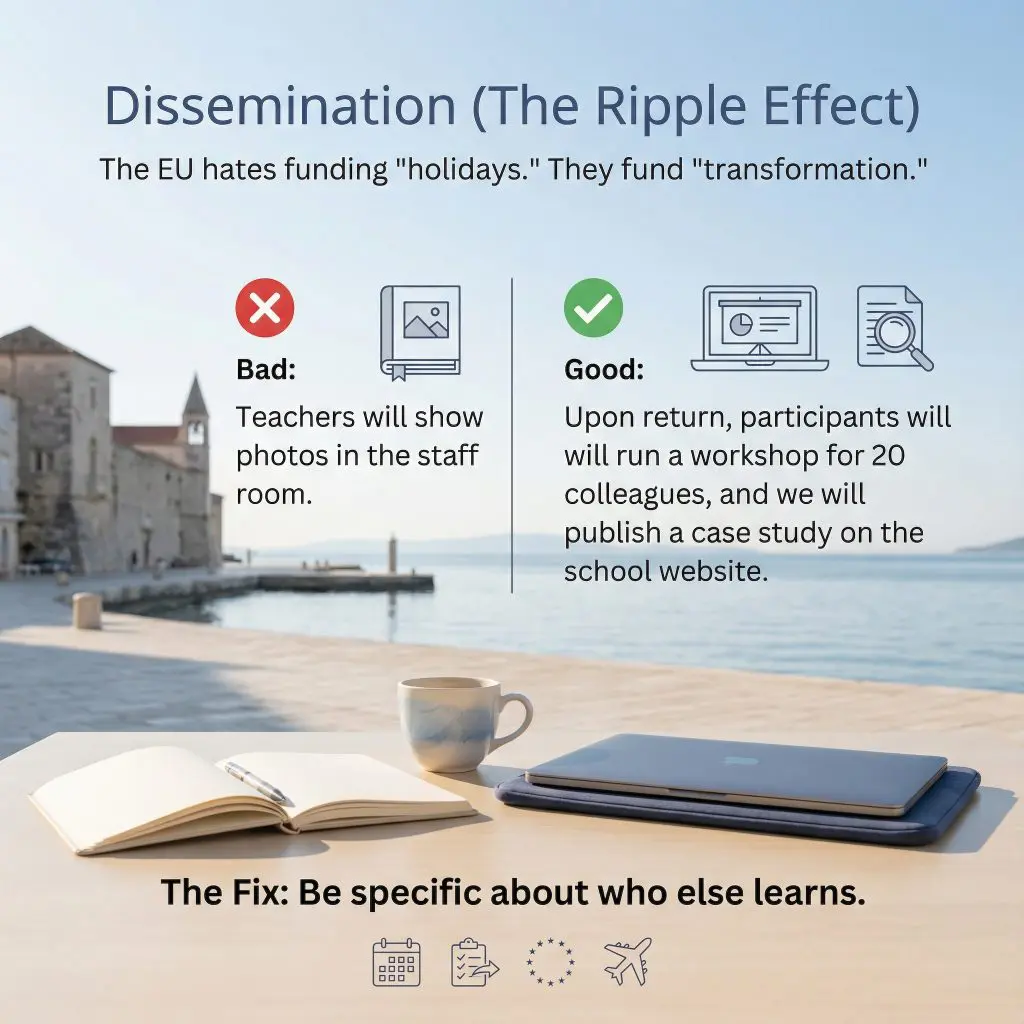
The EU hates funding “holidays.” They fund “transformation.”
-
Bad: “Teachers will show photos in the staff room.”
-
Good: “Upon return, participants will run a workshop for 20 colleagues, and we will publish a case study on the school website.”
-
The Fix: Be specific about who else learns.
The Final Polish You have one week left. Don’t add more words. Add more clarity. If you need a “Partner Mandate” (Letter of Intent) or a specific Course Schedule to boost your “Quality of Design” score, email us today. We reply within 24 hours.
📩 If you want a final evaluator-style review before submission, now is the moment. Contact us at info@linaedu.eu TODAY!