Some time ago I spent a week in Lisbon (it was for an Erasmus+ course) and while walking along the streets with souvenir shops along the way, I couldn’t but notice the repeatedly used image/picture/figurine of a rooster representing Portugal on the souvenirs. And I thought to myself: “What is the big deal with this rooster? Who would ever buy a plate with a rooster on it?” Read to the end of the article to see what happened.
Storytelling as a Part of Life and a Tool
I used the verb “see” instead of “read, learn, find out”. Why? Well, basically, our mind likes images. When we “see” something, we understand it. It is this same concept that is inherent in humanity. Storytelling has been a part of our lives for thousands of years. Long before textbooks and digital tools, stories were how children learned values, language, history, and problem-solving skills. Today, research continues to confirm what teachers already know from experience: storytelling is one of the most powerful tools in education.
Behind the Scenes
Storytelling allows listeners to connect to the speaker through mirroring the brain activity which will lead to empathy, social learning, action understanding and recognizing differences in mental states of others.
A story makes the listeners turn scenes into their own ideas and experiences. While they process facts, several areas in the brain are engaged.
When the brain experiences an emotionally charged event, it releases dopamine and makes us remember more easily and accurately.
Storytelling in the Classroom
Stories naturally support:
- Vocabulary building
- Sentence structure and grammar copying
- Listening and comprehension skills
- Reading and writing confidence
When children hear stories, they absorb language patterns and chunks of language. Retelling stories or creating their own helps them practice language.
Storytelling boosts imagination and creativity. Stories invite open-ended thinking. Children imagine:
- New worlds and characters
- Alternative endings
- Creative solutions to problems
This kind of thinking supports innovation, creativity, and flexible problem-solving skills essential outside the classroom.
Stories Improve Memory and Focus
Stories have a natural structure: beginning, middle, and end. They follow the pattern: a character, a conflict, a climax, a closure.
This helps children:
- Strengthen memory
- Improve attention span
- Learn sequencing and cause-and-effect
Children often remember lessons better when they are embedded in a story rather than presented as isolated facts. It is a simple technique that is adaptable for presenting and memorizing – from facts to more complex ideas. All you need is practice and readiness to be creative with images in your mind.
Stories Heal
Stories support emotional and social development. Through characters and plots, children explore emotions safely. Stories help them:
- Understand feelings like fear, joy, anger
- Learn conflict resolution and cooperation
- Develop perspective-taking skills
A child who struggles to express emotions may find it easier to talk about how a character feels rather than themselves.
Stories sometimes show us the unthinkable or the “too painful” but, at the same time, they push us to reflect, remember and (re)live experiences to reach the result of transforming (an idea or emotion or…) and relieving (the bad or the pain). In the ancient times it was recognized as catharsis, right? Isn’t this a good way to Grow with Storytelling?
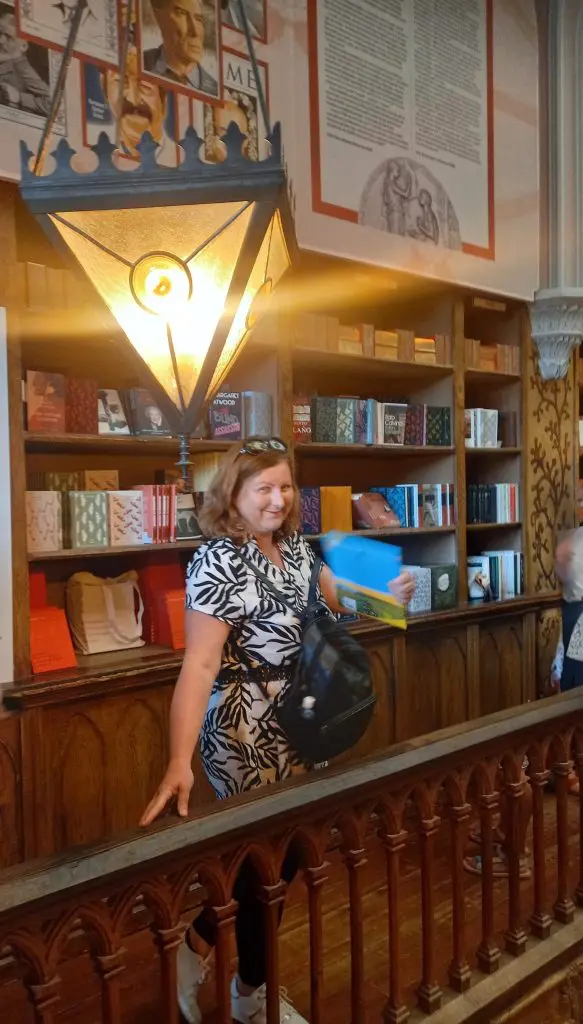
Grow with Storytelling: “From Scene to Screen”, a Lina Edu Erasmus + teacher training course in Split, Croatia, shows educators how to use storytelling to transform education into engaging, memorable, and emotionally rich learning experiences for children. Moreover, it highlights an image or a scene as a powerful tool for developing 4C skills: critical thinking, creativity, collaboration and communication. It leads the participants through storytelling as (public) speaking practice and it gives them a hint of storytelling in heritage learning, too. Myths, legends, family histories, and local stories have been contributing to the survival of heritage across generations. When children learn heritage through stories, history becomes personal. Instead of memorizing facts, children remember:
- The fisherman who lived by the sea
- The child who grew up inside old city walls
- The little girl who travelled through the deep forest to help her brother
Heritage stories introduce us to:
- Different ways of life
- Past challenges and values
- Cultural diversity and continuity.
Storytelling in heritage education helps a person:
- Connect emotionally with cultural heritage
- Understand historical context through human experiences
- Develop respect for local and global cultures
- Build identity and a sense of belonging
By stepping into the perspective of historical or fictional characters, we can develop empathy and intercultural understanding – priorities of the Erasmus+ programme.
Which brings me back to the beginning – the rooster!
The Rooster Story – Practice Storytelling
It turns out that there is a local tale of the Rooster of Portugal. And it goes something like this…
But before you read it, take a piece of paper and a pencil, draw a 4*4 grid (just like you are playing tic-tac-toe) and while you read, draw the scenes of the tale in the empty squares in the grid. Later, when you close the article, try to retell the tale only by looking at your own drawings.
There was a pilgrim passing near Braga on his way to Santiago de Compostela. He decided to spend a night in one of the local taverns so he can continue his pilgrimage on the following morning. During the night, there was a theft. Things and valuables were stolen from the tavern owner. And the pilgrim was accused. He was put to prison. He was trying to justify himself; to prove the villagers they got the wrong person, that he wasn’t the thief. It was in vain. He was sentenced to death. His last wish was to see the judge. The judge was having a feast. But he agreed to talk to the poor pilgrim. The pilgrim once again tried to convince the judge of his innocence. He said: “The rooster you now have on your plate will jump up from the plate and crow when the time of my death arrives; this will prove my innocence.” The judge didn’t eat the rooster. He waited for the time. And so it happened that the rooster jumped up from the plate and crowed. The judge ran to the gallows to save the pilgrim. When he arrived there, the pilgrim wasn’t dead. The knot was weak and this saved the innocent man. The judge immediately freed him. Since then, the rooster has been the symbol of truth and justice.
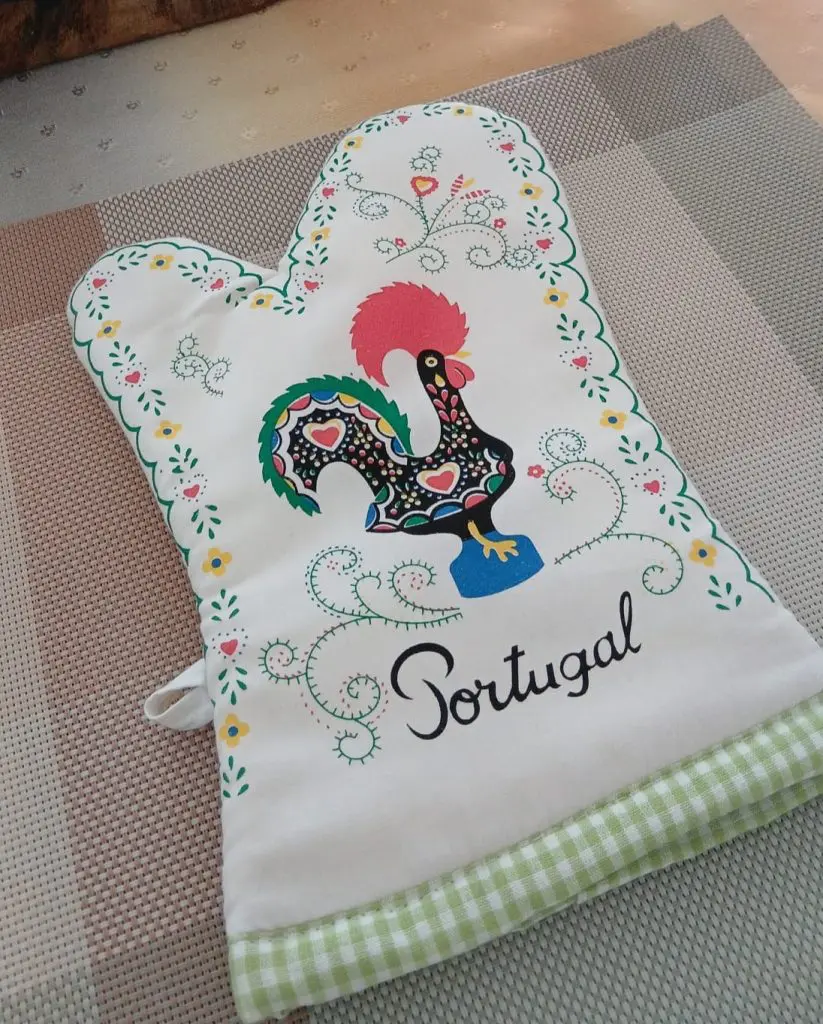
And I have a souvenir from Portugal in my kitchen. Can you guess what it is?
Author:
Kristina Mijandrušić Ladavac, English language teacher
Lina Edu lead educator of teacher training course “Grow with Storytelling: “From Scene to Screen”
👉https://linaedu.eu/erasmus-course-grow-with-storytelling-from-scene-to-screen/