As the new Erasmus+ application period approaches, good planning becomes essential. The deadline for Key Action 1 (KA1) – Learning Mobility of Individuals is 19 February 2026, while Key Action 2 (KA2) – Cooperation Partnerships and Small-scale Partnerships are due on 5 March 2026. With these dates in mind, now is the right moment to strengthen project planning processes and teamwork.
A Solid Foundation: Build a Strong Project Team
Preparing an Erasmus+ project application is a complex and collaborative process. Successful applications are built on teamwork, shared responsibility, and a clear division of roles. A strong project team should consist of members who are eager to learn, develop their language skills, collaborate, travel, and connect with colleagues across Europe.
These team members will help integrate fresh teaching methods, implement project outcomes in the classroom, and contribute to the school development plan. They also play a central role in disseminating results and generating new ideas for future project applications-elements essential to sustaining Erasmus+ best practices over time.
Team Members: Every Partner Counts
Every partner is equally important. Regardless of specific roles, each team member must be active, responsible, punctual, collaborative, decisive, responsive, and committed to the project. These qualities form the basis of a reliable partnership and a well-functioning project team.
At Lina Edu, we are often asked how to manage collaboration between partners with different working habits, expectations, and schedules. The answer lies in establishing a clear working structure from the very beginning.
Successful Collaboration
Time management and consistent project performance are often the main challenges in international partnerships. Each partner institution should appoint a team leader responsible for coordinating internal work and ensuring smooth cooperation with the wider consortium.
Here are the five key steps that should be taken when planning Erasmus+ project work:
-
Define Tasks Clearly
As an international team, determine together the activities to be carried out-what will be done, by whom, when, and where. Creating a detailed schedule or timetable is highly recommended.
Be realistic about the complexity of activities and possible risks (delays, absences, technical challenges). Identifying potential problems early will help ensure tasks are completed on time.
-
Set Realistic Deadlines
Keep in mind that project funds may take time to arrive in your institution’s account. Planning major activities within the first three months of the project is often risky.
For KA2 projects, allow at least one to one-and-a-half month for partners to complete tasks. This timeframe is usually sufficient to ensure high-quality work and avoid unnecessary delays.
-
Assign Responsibilities Transparently
Clearly agree who is responsible for each task. Transparency is essential to avoid misunderstandings later on.
Although each partner is responsible for their own work, someone must monitor progress and ensure quality. Designate a task coordinator or quality checker to oversee the workflow and support partners when needed.
-
Schedule Meetings Between Mobilities
Even with a well-prepared activity plan, regular meetings are vital.
For KA1 projects, hold meetings before and after each mobility. Pre-mobility meetings help prepare participants, while post-mobility meetings facilitate documentation, dissemination, and reporting.
For KA2 projects, meet after each completed activity to discuss challenges, lessons learned, and improvements. These meetings function as a normal “post-operative” phase, similar to reflective practice in teaching.
-
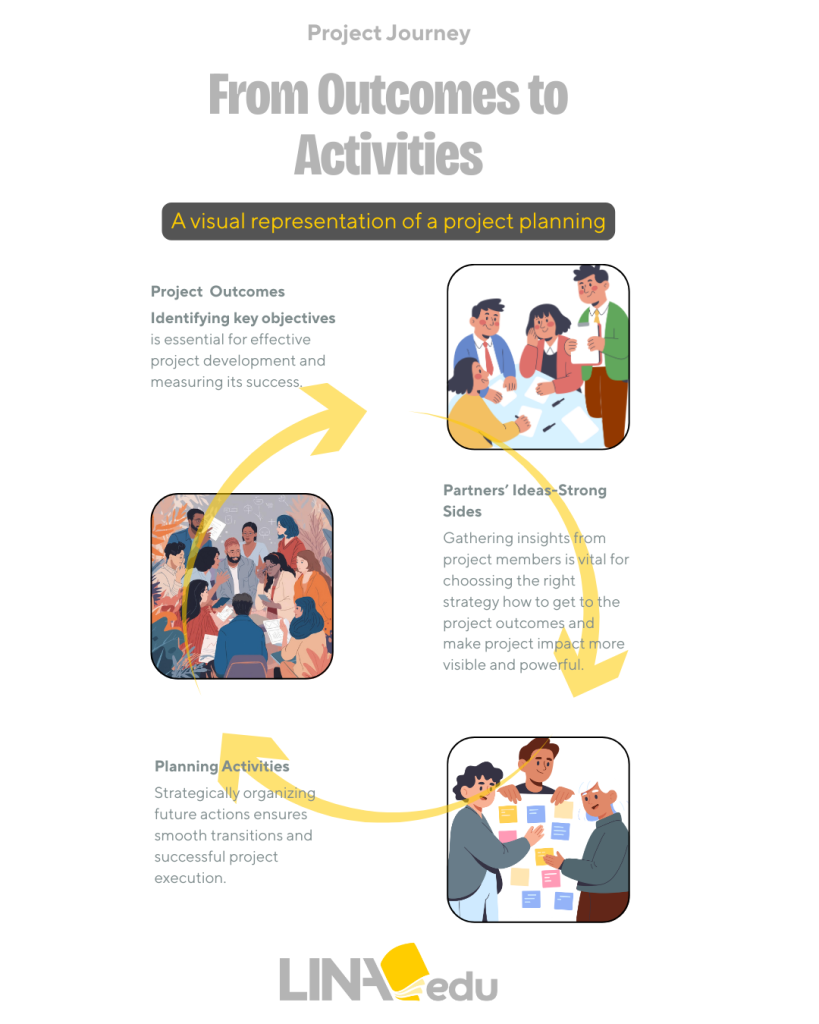
Start From the End
Begin planning your project by focusing on the expected outcomes, impact, and dissemination strategy. Then work backwards to define activities that will lead to those results-similar to the logic of lesson planning.
When the outcomes are clear, measurable, and realistic, your application becomes significantly stronger.
For more guidance on planning and applying for Erasmus+ projects, visit the Lina Edu YouTube channel:
👉 https://youtu.be/jBlsx85zNhg?si=8JBUoXmhiQl8etdF
Writing an Erasmus+ application is not just administrative work-it is a self-reflective, educational, and motivational process that strengthens your professional development.
If you have any questions about planning your Erasmus+ project, feel free to contact us: info@linaedu.eu
Until then,
We wish you successful planning-and an inspiring Erasmus+ journey!